What is the origin of Christmas spices?
Spices are indisputably linked to the Christmas period. They are used in both sweet and salty preparations, infusion and even decoration. What is the origin of this tradition? What are the Christmas spices? What are their uses?
Before discovering these, it is necessary to immerse yourself for a few moments in the Middle Ages.
At that time, the use of spices was common in medieval gastronomy. According to Bruno Laurioux (from the use of spices in medieval food) , historian of the medieval era, we count More than three quarters of the recipes that contain spices. Spices were considered as products reserved for an elite and with extraordinary virtues. Many medical works refer to the use of spices to treat themselves. In addition, their origins promote fascination for these products from a magical and mystical East. ) )
Books "Le Viandier", 1486, recipe book written by Guillaume de Taillevent Maitre Cuisinier des Rois Charles V and Charles VI and "Le Mesnagier de Paris" writes in 1392 refer to more than twenty spices used at that time.
A wealthy shortcut is often used to caricature the use of spices at that time: only having to hide the putrid smell of damaged food. They were as precious as today would be saffron or truffle. They were an absolute criterion of social distinction, symbols of prestige and wealth. Also and curiously, from the 17th th and 18 th centuries the spice palette in gastronomy was considerably reduced to the benefit of a new kitchen. But the means of food conservation, they had not changed, we could not better keep meat in the Middle Ages than at the Renaissance.
But let's go back to our Christmas spices! There is no doubt about the use of spices at that time. We note in northern Europe (and in particular in Germany) the presence of cakes and spice pastries during the Advent period in monasteries. This period was considered a period of reflection, repentance and introspection before the Nativity Festival.
The fast was thus common but the sweets with admitted spices. Indeed, they were considered and rather seen as a medicine for the soul, the mind and the body. Hildegard von Bringen (considered the first German naturalist) describes the benefits of the nutmeg contained in the gingerbread and pepper on moods. We do not want to think for a moment that the monks were delighted from pastries to spices; No, the use of these sweets was certainly and only purifier of the body and the mind, a drug.
There are also in France references of spices cakes used by the Cistercian monks of Marienthal (Alsace) at the end of the Middle Ages. (15 th century)
The origin of Christmas pastries therefore comes from medieval monasteries. You can cite as an example of the gingerbread but also the stollen (of German origin, bread with dried and candied fruit, stuffed with almond paste and of course spices)

With the massive diffusion of gingerbread around Nuremberg (Germany) and then in Alsace, then grafted a whole bunch of variants of cakes and cookies according to uses, regions with more spice dosages or less varied. (Fruit bread, förtchen, cinnamon stars, speculoos, vanilla crescents, chocolate -coated gingerbread, etc.)
What are Christmas spices?
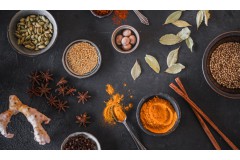
This is that today Christmas cookies have become a real tradition featuring a whole series of essential spices:
cinnamon, It is the Christmas spice with warm and sweet flavors. It enters the composition of many pastries but can be used in infusion.
ginger , lemony, peppery and powerful. It’s a spice that fits perfectly with the Christmas season. It’s a hot and comforting spice. It can go both sweet and salty.
Muscade , its resinous, hot notes is also associated with Christmas that is found in mixtures (four spices, mulled wine) or is simply in savory dishes.
The clove is a part (with cinnamon) of the decoration of the festive Christmas tables, inseparable from the stuck oranges with the nails. He also enters many Advent mixtures.
cardamom , majestic spice with menthol, resinous, hot flavors, she brings subtle notes in the desserts. It can be added to the gingerbread and we find it in the famous Stollen
Badiane or Anise Star Its aniseed taste is found in multiple mixtures. Also used in decoration for its aesthetics.
The four spices is a mixture made up of cinnamon, nutmeg, pepper and cloves. Our four spices is perfectly suited to gingerbread but also for foie gras, terrine, cold meats.
mulled wine , what would Christmas be without this drink? Our mulled wine mixture combines Ceylon cinnamon, star anise, cloves, ginger and combava which will bring lemon and orange citrus notes. The history of mulled wine is by here!
vanilla , Christmas queen spice for the most beautiful culinary achievements.
the tonka bean made a more recent appearance, but she is a pretty vanilla and almond juice.

max Daumin
Epices Max Daumin
or 2017-2018 silver 2020-2021 bronze 2019 | National grocery trophy
Artisan producer of the Culinary College of France 2021
cardamom , majestic spice with menthol, resinous, hot flavors, she brings subtle notes in the desserts. It can be added to the gingerbread and we find it in the famous Stollen
Badiane or Anise Star Its aniseed taste is found in multiple mixtures. Also used in decoration for its aesthetics.
the tonka bean made a more recent appearance, but she is a pretty vanilla and almond juice.